
NBA props are the fastest-moving market in American sports. Lines go up the night before, a single injury report can reshape a whole roster's numbers in minutes, and there is a game almost every night from October to June. That pace is the opportunity: the books have to reprice hundreds of props every time a player is ruled out, and they are not equally fast on all of them. This is the NBA entry in our Props by Sport series; our earlier piece on finding NBA props with value covers the pricing side in more depth, and the WNBA guide covers the summer league.
Minutes first, everything else second
Every counting stat in basketball is a rate times minutes. A player averaging 0.7 points per minute scores 21 in 30 minutes and 14 in 20. Before you look at matchups, form a view on minutes:
- Rotation role. Starters in the mid-30s, key reserves in the 20s, spot players who can play 8 or 28 depending on the night.
- Blowout risk. A big spread means starters may sit the fourth quarter. A 14-point favorite's stars are an under lean on volume even when the matchup looks good.
- Foul trouble tendencies for big men who pick up early fouls.
- Rest and back-to-backs. The second night of a back-to-back, especially on the road, is when minutes restrictions and rest days happen. Veterans on contenders sit more than young players on rebuilding teams.
If your minutes projection differs from what the line implies, that is usually the whole bet.
Usage: who eats when a star sits
When a high-usage player is ruled out, his shots and touches go somewhere. They do not split evenly. Usually one or two teammates absorb most of it: the secondary ball handler takes the assists, the next scorer takes the shots, and the backup at the same position takes the minutes. Books adjust the obvious beneficiary within minutes of the news. The second and third beneficiaries lag, and so do combo props and alternate lines.
Things to check the moment a star is ruled out:
- Who has played without him this season, and what did their minutes and usage look like in those games? Five games without the star are worth more than fifty with him.
- Which props moved and which did not. If the backup point guard's points moved but his assists and minutes did not, the assists are the bet.
- Whether the absent player's position is covered by one player or a committee.
Pace and matchup
Pace adds possessions, and possessions add every counting stat. A game between two fast teams can have 8 to 10 more possessions than one between two slow teams, which is several extra shots for every starter. Totals already reflect pace, so the game total is a quick check on whether volume is expected.
Matchup matters most for specific stats rather than for "good defense" in general:
- Rebounds depend on the opponent's shooting (more misses, more rebounds) and on whether they send bodies to the offensive glass.
- Assists depend on how a defense forces the ball out of a star's hands.
- Threes depend on how much the opponent concedes from three versus the paint.
- Points in the paint versus perimeter decides which big man or guard benefits.
Combo props and alternates
Points + rebounds + assists (PRA) and the two-stat combos are popular because they smooth variance. They are also priced from the individual lines, and when one component moves on news the combo sometimes lags. After any injury news, check whether a player's combo moved as much as his components did.
Alternate lines are where the lumpiness of basketball distributions matters. A three-point shooter's distribution is not a smooth bell curve: he makes zero some nights and five others. Alt lines priced by a smooth model can misprice those tails. PropsEdge player pages plot the game log against the line so you can count how often he actually cleared the alt number.
First basket
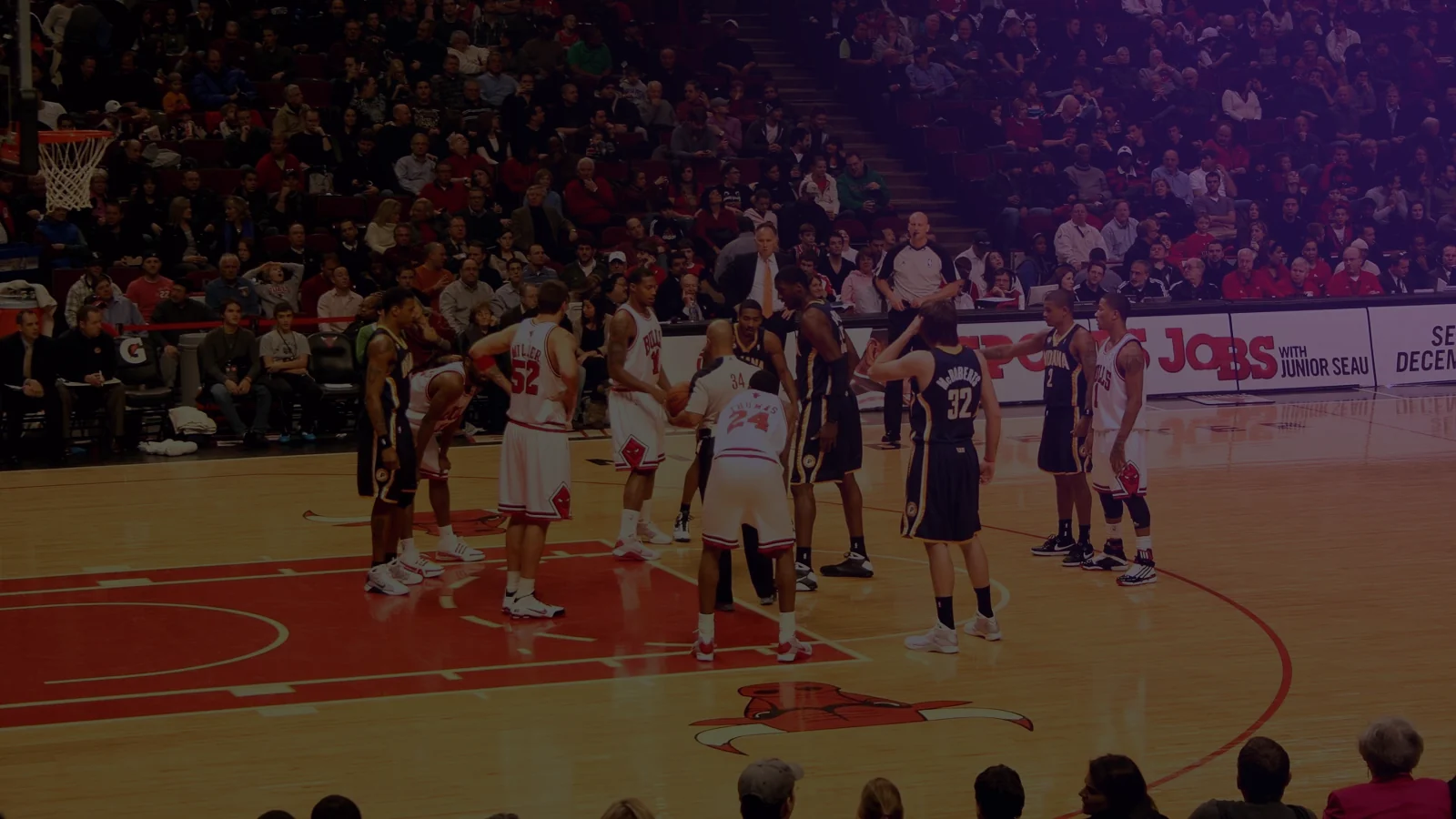
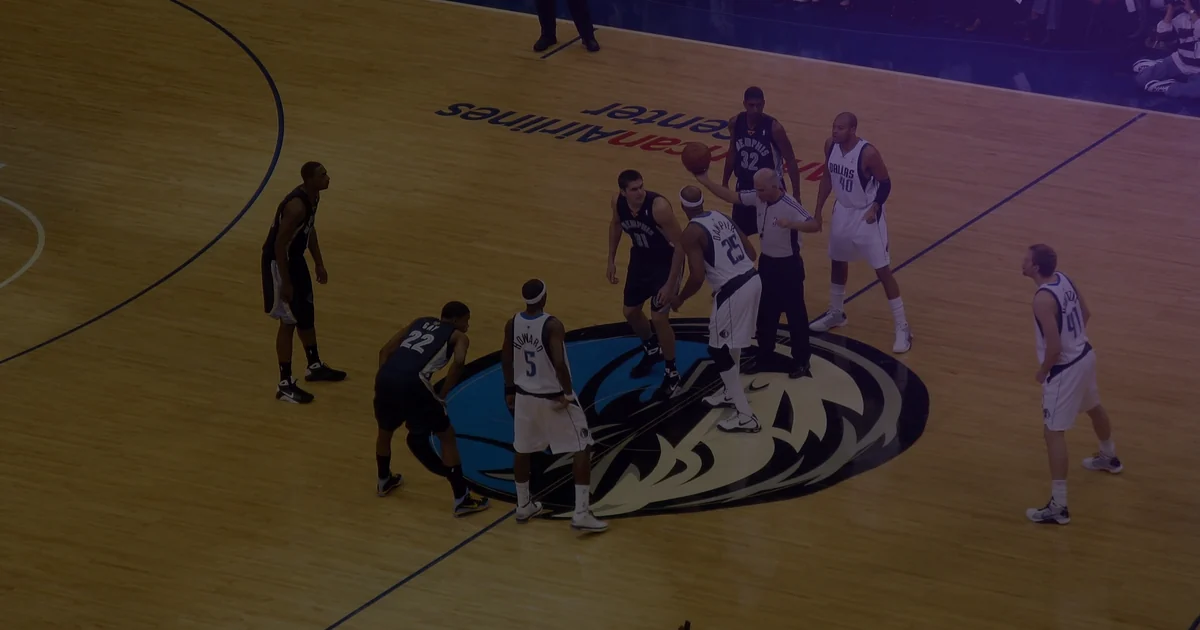
Photo: Brent D. Payne, CC BY 2.0, via Wikimedia Commons, color graded.
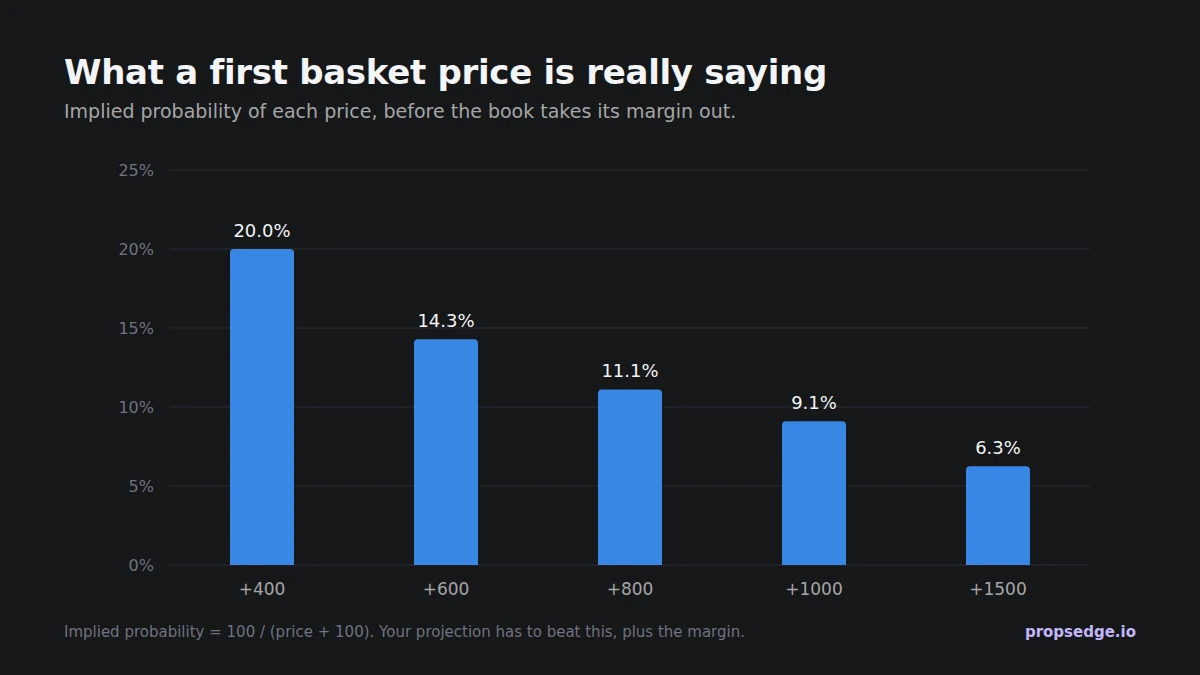
First basket props pay long prices (usually +400 to +1500) on which player scores the first field goal. They depend on things the regular props do not:
- Who wins the opening tip. The tip winner's team gets the first possession, which roughly doubles their players' chance of scoring first.
- Who takes the first shot on the opening possession, which is a repeated pattern for most teams.
- Each starter's first-shot rate and first-quarter scoring.
The NBA First Basket cheat sheet projects the tip, splits every starter's first basket rate by tip won and tip lost, and compares it to the posted odds, with the top picks free to preview. Treat first basket as a volume market with small stakes: even a good edge loses most nights.
Pick'em apps
The NBA is the busiest sport on PrizePicks and Underdog, and the app lines lag sportsbook moves on injury news more than anywhere else. A player whose sportsbook points line jumped 3 points after a teammate was ruled out may still show the old number on a pick'em app for a while. That gap is the best pick'em bet in any sport. The PrizePicks and Underdog guides show the break-even each slip needs; the payout comparison shows which app pays which slip best.
A nightly routine
- Afternoon: read the injury report. Mark every questionable player and who benefits if they sit.
- Before lines settle: build a minutes projection for the players you care about. Compare it to what the line implies.
- Shop. PropsEdge lists 15+ books and the pick'em apps for each player with the devigged Chance%; the Value sort surfaces the biggest gaps.
- Around 30 minutes before tip: confirmed lineups. This is when the second wave of mispricings appears, as books and apps adjust at different speeds.
- Log every bet with the price you got and the closing price (why that matters).
Common mistakes
- Trusting season averages after a role change. Recent minutes after a lineup change beat the full-season number.
- Betting overs on big favorites' stars. Blowouts cut minutes.
- Chasing the obvious injury beneficiary after the line has already moved. Look one player further down the rotation.
- Oversizing first basket. Long odds mean long losing streaks. The variance guide explains why that is normal.
Where PropsEdge fits
NBA projections with minutes and usage context, every book and pick'em app on one screen per player, and the First Basket sheet. For the underlying math, how expected value works and bankroll management. Bet what you can afford to lose. If it stops being fun, stop. Help is free and confidential at 1-800-GAMBLER.
Cover photo: theterrifictc, CC BY-SA 2.0, via Wikimedia Commons, color graded.