

The WNBA is the best place in American sports to find a mispriced player prop. The reasons are structural: fewer bettors, lower limits, less sharp money correcting the lines, and trading teams that spend far more time on the NFL and NBA. The league itself also makes props more predictable than the NBA in some ways, with shorter rotations and stars who play heavy minutes. This is the WNBA entry in our Props by Sport series; most of the method is shared with the NBA guide, so this post focuses on what is different.
Photo: John Mac, CC BY-SA 4.0, via Wikimedia Commons, color graded.
Why the lines are softer
Sportsbooks move a line when money tells them to. A market that takes little money moves little. WNBA props are posted later, adjusted less often and bet by fewer people who price them carefully. That means:
- Injury and lineup news takes longer to reach the price, especially on secondary players and combo props.
- Books disagree with each other more. The gap between the best and worst price on the same WNBA prop is often wider than for an NBA star. Shopping alone is an edge.
- Pick'em apps lag even further. A PrizePicks or Underdog line posted in the morning may not move at all on afternoon news.
The trade-off is that limits are lower. That matters to a professional; for most bettors it does not.
Short rotations, heavy minutes
WNBA teams often play a tighter rotation than NBA teams, and top players log a large share of available minutes (games are 40 minutes, not 48, so compare shares rather than raw totals). That makes a star's volume more predictable, which is good for you, and it makes the one or two bench players who absorb minutes when a starter sits the main source of edge.
When a starter is out:
- Look at games this season without her. With 12 rosters and fewer games, samples are small, so weight them sensibly, but a clear pattern in three or four games is still informative.
- Identify who takes the minutes and who takes the shots; they are not always the same player.
- Check which props on those players moved. The ones that did not are the bet.
Schedule and travel
The WNBA packs its season into a short window with long travel between some markets. Look for:
- Back-to-backs and short rest, particularly after cross-country travel. Veteran stars on playoff teams are managed more carefully late in the season.
- Mid-season stretches where one team has played several games in a few days and the opponent is rested.
- Games with standings consequences versus games that do not matter for seeding late in the year, when rotations can loosen.
Pace and matchup
As in the NBA, pace adds possessions and possessions add every counting stat, but the spread between the fastest and slowest WNBA teams can be larger in relative terms, which makes the game total a useful volume signal. Matchups matter by stat: rebounding depends on opponent size and shooting, assists on how a defense handles the primary creator, threes on how much the opponent concedes from deep.
First basket
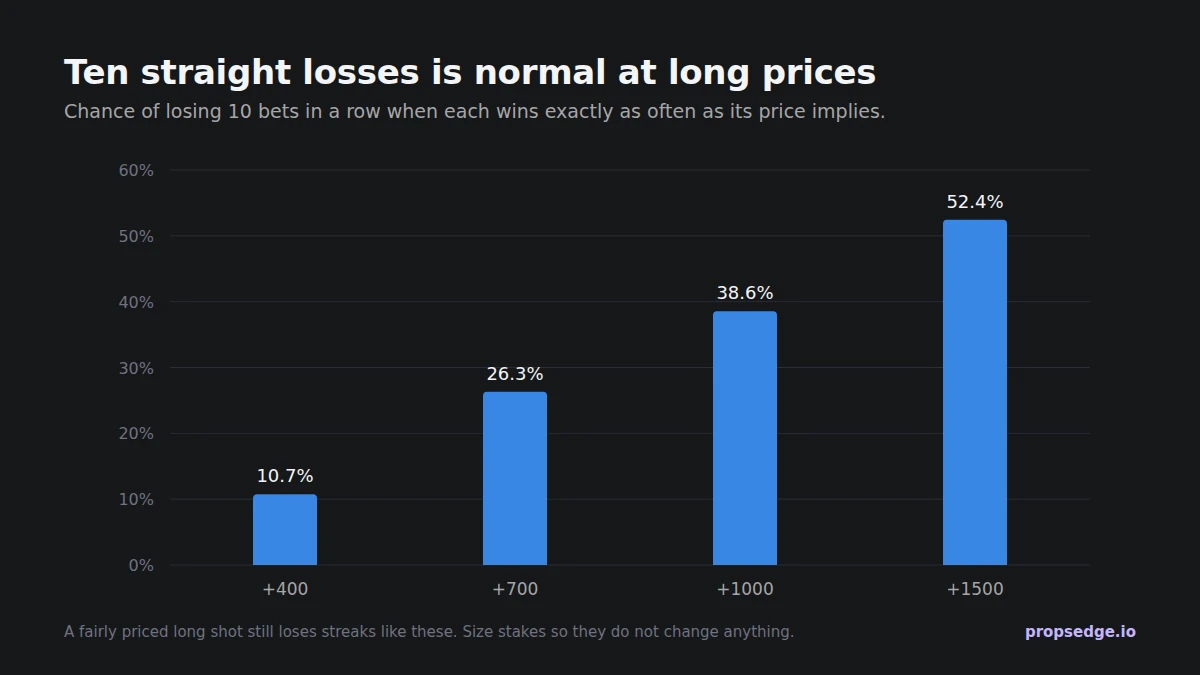
WNBA first basket markets work the same way as the NBA's: the tip winner's team gets the first possession, starters have repeatable first-shot patterns, and prices are long. The difference is that the market is thinner, so prices can sit further from fair. The WNBA First Basket cheat sheet projects each tip, splits every starter's first basket rate by tip won and lost, and compares it to the posted odds, with the day's top picks free to preview. Stake small: even a good edge on a +700 price loses far more often than it wins.
Pick'em apps
The WNBA is where the gap between pick'em app lines and sportsbook lines is widest, particularly after injury news. When a sportsbook moves a player's points line two or three points and the app has not, that pick clears any slip's break-even comfortably. The PrizePicks and Underdog guides show exactly what each slip needs, and the payout comparison shows where each slip pays best.
A routine for the season
- Morning: check the injury report and which lines are up. WNBA lines post later than NBA lines, so the first look may show only a few books.
- Afternoon: build a minutes view for players affected by news; compare to the lines as more books post.
- Shop hard. PropsEdge shows each player's line at 15+ books and the pick'em apps, with the devigged Chance%. The gap between books is itself a signal in a thin market.
- Near tip: confirmed starters. Re-check the players who benefit.
- Log each bet with price and closing price. In a thin market, closing line value is noisier, so track it over a full season rather than a week.
Common mistakes
- Treating the WNBA like a smaller NBA. Rotations, minutes shares and market depth are different; the method carries over, the numbers do not.
- Overreacting to tiny samples. Twelve teams and a short season mean a hot two-week stretch can look like a trend. Weight role changes, not hot shooting.
- Betting the stars only. The best mispricings are on the players the books spend the least time on.
Where PropsEdge fits
WNBA projections, every book and pick'em app per player on one screen, and the WNBA First Basket sheet. For the math underneath, how expected value works and bankroll management. Bet what you can afford to lose. If it stops being fun, stop. Help is free and confidential at 1-800-GAMBLER.
Cover photo: John McClellan, CC BY-SA 4.0, via Wikimedia Commons, color graded.

.jpg)
