

NFL player props are the most bet and most researched markets in American sports. That means the main lines on stars are sharp and the edge lives in the details: a role that changed last week, a coverage matchup the market has not priced, a touchdown number on a player the books treat as an afterthought. This guide is the NFL entry in our Props by Sport series. If you play pick'em apps, pair it with the PrizePicks and Underdog guides; if you bet at sportsbooks, the DraftKings and FanDuel guide.
Start with opportunity, not talent
Yards and receptions are volume times efficiency, and volume is far more stable week to week. A receiver who runs a route on 90% of dropbacks and earns a target on a quarter of those routes will get his looks against almost any defense. Efficiency (yards per target, catch rate) swings wildly on small samples. The numbers that matter, in order:
- Routes run and route participation. How often is the player actually out running a route when his quarterback drops back? A receiver's yards line should move when this changes, and it often lags.
- Targets per route run (TPRR). How often a route becomes a target. Above 25% is a primary option; below 15% is a decoy.
- Target share and air yards share. How much of the team's passing volume goes to him, and how far downfield.
- Average depth of target (aDOT). Deep targets produce lumpy yardage: big games and duds. Short targets produce steady receptions. It changes which side of a yards line you prefer and which alternate lines are mispriced.
- Snap share and rush share for running backs. A back with 70% of snaps and most of the goal-line work is a different bet from a committee back with the same season average.
PropsEdge player pages carry all of this for pass catchers, including a route-tree view, man-versus-zone splits and a receiving-zone chart against the week's defense. The Route Mismatches and Speed Mismatches cheat sheets rank the week's best usage-against-defense combinations in one list, free to preview.
Matchup: coverage, not "bad defense"
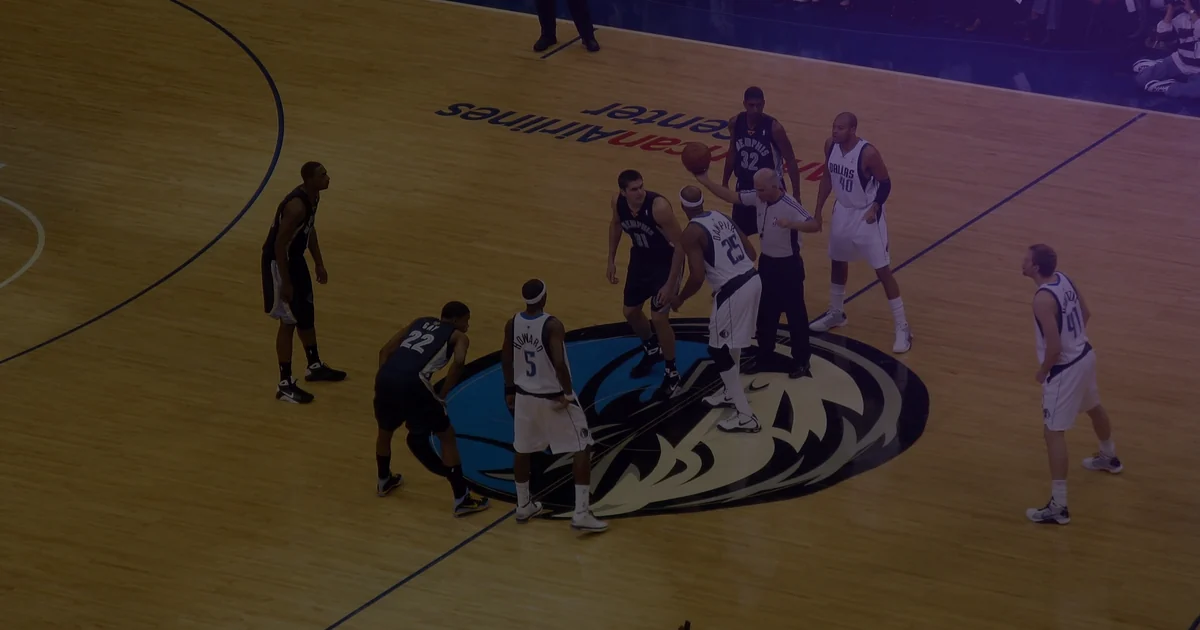
Photo: Keith Allison, CC BY-SA 2.0, via Wikimedia Commons, color graded.
"Plays a bad pass defense" is priced in by Wednesday. What is priced less well is how a defense is bad:
- A defense that plays heavy zone and gives up yards underneath is a gift to a slot receiver with a short aDOT and a problem for a deep threat.
- A man-heavy defense with a weak corner on one side matters for the receiver who lines up there, not for the whole receiving room.
- A defense that allows touchdowns to tight ends in the red zone is a tight end touchdown story, not a receiver story.
The Redzone Matchups sheet shows where each defense gives up scores by position, and the TD Matchups sheet breaks that down by role in the pecking order: how many touchdowns a defense allows to the WR1, the TE1, the RB1.
Game script decides rushing props
A running back's carries depend more on whether his team is ahead than on anything about him. Favorites run late to kill the clock; underdogs abandon the run. Read the spread and total before you read the back:
- A back on a big favorite in a low-total game is the classic rushing attempts over.
- A back on a big underdog loses carries but may gain receptions; his rushing line and his receiving line can point in opposite directions.
- A high total with a close spread means volume for everyone, which lifts every counting stat in the game.
Quarterback rushing lines are the exception: scrambles rise when the pass rush wins and when the team is behind, which is the same game-script story from the other side.
Touchdowns: the most mispriced market
Anytime touchdown props are priced with the most juice of any NFL prop, often a 6% to 10% hold, and they are bet heavily on names. That combination makes them both the most expensive market and the one with the biggest mispricings on secondary players. What predicts touchdowns:
- Red zone and goal-line share. Who gets the ball inside the 10 and inside the 5. A back with 70% of goal-line carries is a touchdown bet at almost any price under +150.
- Team implied points. A team expected to score 28 has more touchdowns to hand out than one expected to score 17. Split the total by the spread to get it.
- Opponent's touchdown profile by position, per the sheets above.
First touchdown props multiply all of that by "who gets the ball first." Opening-drive tendencies, which team gets the ball first, and who gets the early touches matter as much as season red zone share. The First TD sheet is built around exactly that: each offense's touchdown rate on its opening drives against this defense and the players who get the first touches. The TD Scorers sheet ranks anytime candidates by hit rate, red zone share and matchup, and our free Weekly Edge picks show the method applied every week with the evidence printed under each pick.
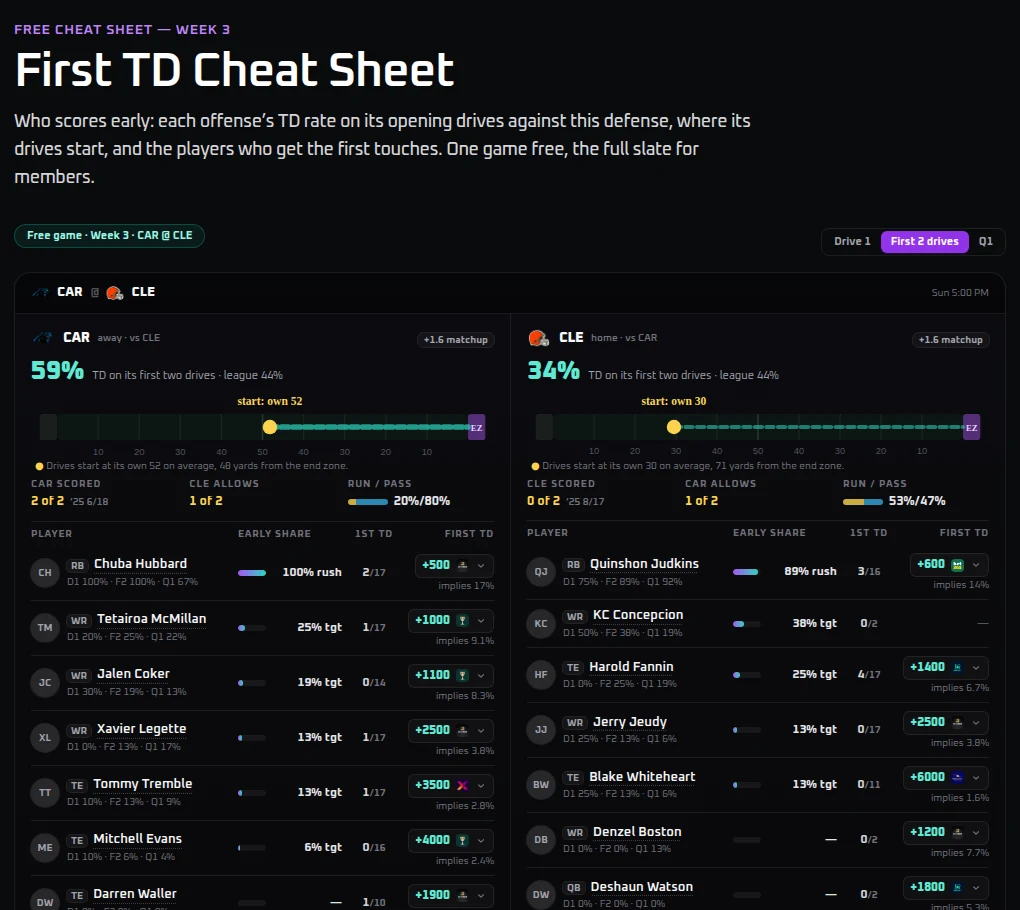
Screenshot of the free PropsEdge page, week of September 28, 2026. Prices move; open the page for today's.
Always shop touchdown props. The gap between the best and worst price on the same anytime TD is routinely 100 cents or more, and it is the single easiest edge in NFL betting. The Line Shopping sheet lists the week's biggest gaps.
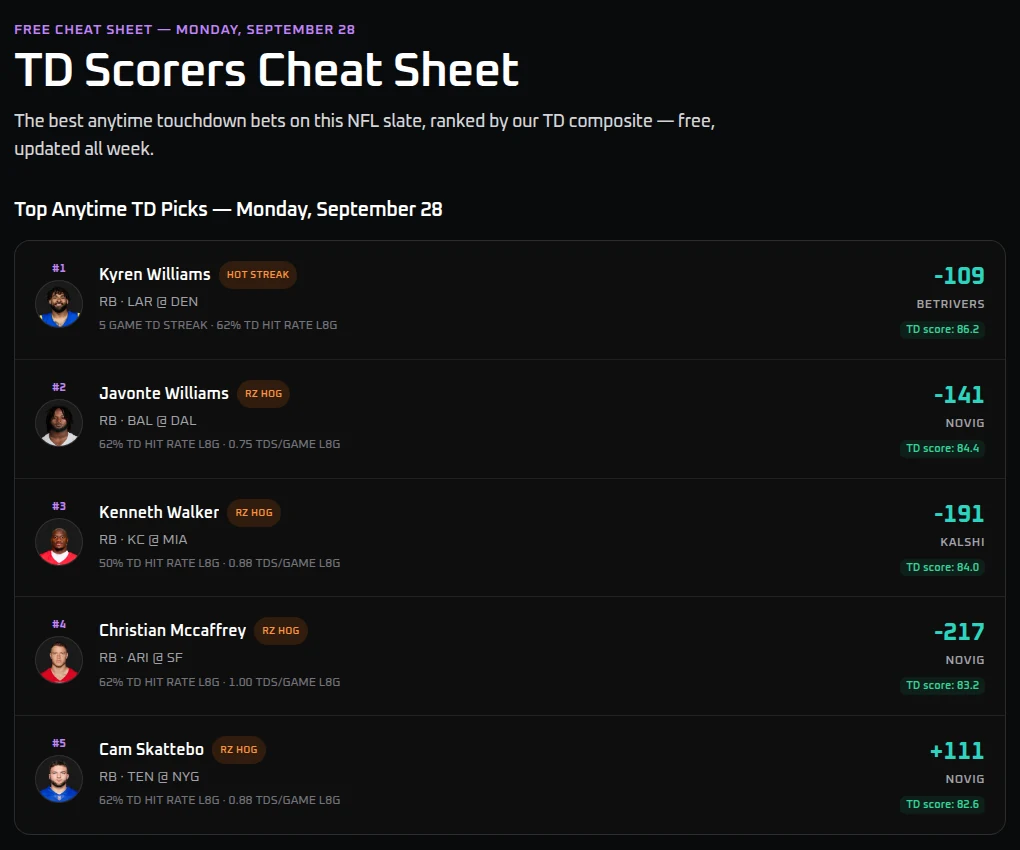
Screenshot of the free PropsEdge page, week of September 28, 2026. Prices move; open the page for today's.
Streaks and why they are not what they look like
A tight end who has gone over his receiving line in eight straight games is not "hot"; his line is probably too low for his role, and the books have been slow to move it. Streaks are useful as a pointer to a line that has lagged the player's usage, not as a prediction on their own. The Prop Streaks sheet prints the streak next to the current line and the usage behind it, so you can tell a stale line from a lucky run.
A weekly routine
- Tuesday and Wednesday: read the usage changes from last week. New starters, routes that jumped, a back who took over the goal line. These are the lines most likely to lag.
- Wednesday and Thursday: open the cheat sheets for the week. Mark the players where usage and matchup agree.
- Before betting: build your own number for each, then shop it across books and pick'em apps. PropsEdge lists 15+ books and the pick'em apps per player, with the devigged Chance%.
- Sunday morning: check inactives. A line that has not moved after a starter is ruled out is the best bet you will see all week.
- After the week: log each bet with the price you got and the closing price. Beating the close is the real scorecard (why).
Common mistakes
- Betting the star's main line. It is the sharpest number on the board.
- Using season averages after a role change. The last three weeks after a promotion matter more than the first eight weeks before it.
- Ignoring the price on touchdowns. A good touchdown read at a bad price is a bad bet.
- Parlaying everything. Correlated legs help on pick'em apps; at sportsbooks the correlation is priced into same game parlays. The SGP guide explains.
Where PropsEdge fits
The NFL cheat sheets (all of them, each with a free preview), player pages with route and coverage splits, and every book and pick'em app on one screen per player. For the underlying math, how expected value works and bankroll management. Bet what you can afford to lose. If it stops being fun, stop. Help is free and confidential at 1-800-GAMBLER.
Cover photo: All-Pro Reels, CC BY-SA 2.0, via Wikimedia Commons, color graded.
.jpg)
.jpg)