

First basket is the most fun bet on an NBA night and one of the easiest to lose money on. It pays long prices, usually +400 to +1500, on which player scores the game's first field goal, and it is settled in the first minute. It is also a market where a careful bettor has a real chance, because the outcome depends on a few things you can measure: who wins the opening tip, who takes the first shots, and what the book is charging. This guide is part of our Sport Guides series and goes deeper than the first basket section of the NBA player props guide.
Read your book's rules first. Most books settle first basket on the first field goal, so a free throw does not count, but some also offer a "first point" market that does. Rules for a player who does not start also differ between books.
The board carries a big margin
Start with the price, because it is the part most people skip. A normal two-way prop has a margin of four or five percent. A first basket board has ten outcomes, and the book builds a margin into every one of them.
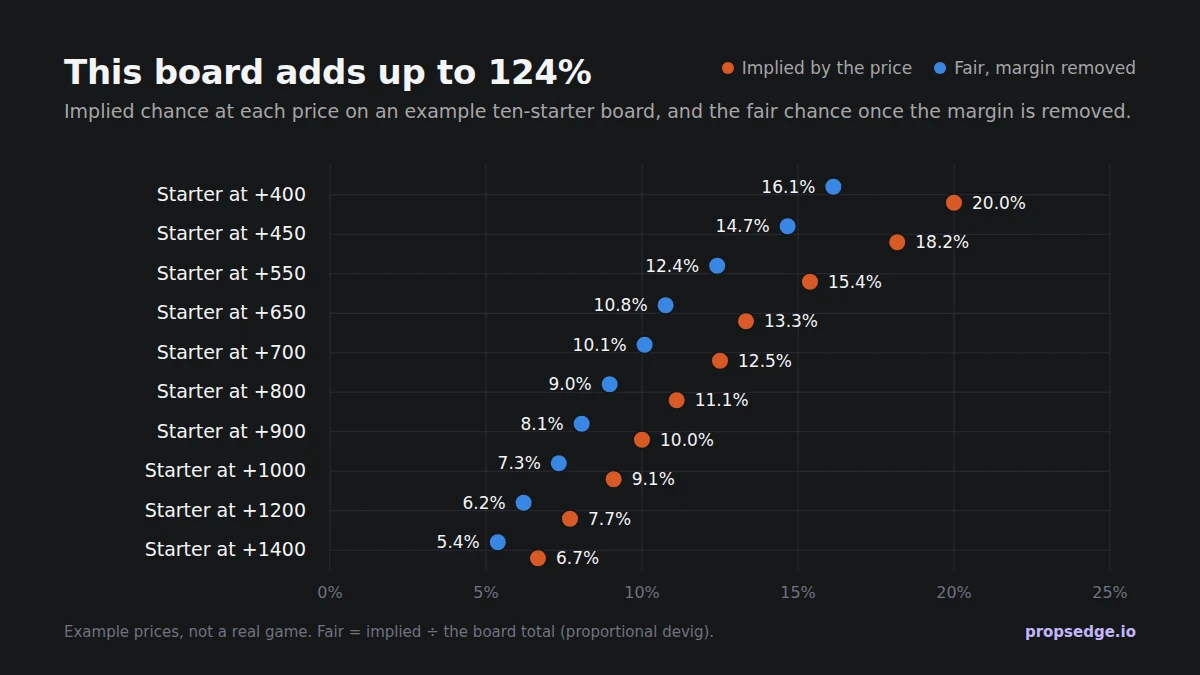
On this example board the implied chances add up to 124%. Spread evenly, that means each starter's real chance is about 19% lower than his price implies: a starter at +700 implies 12.5%, but once the margin is removed the board only gives him 10.1%. Real boards vary, and some books run tighter margins than others, which is why shopping the same player across books matters more here than almost anywhere else. The hold calculator shows a board's margin from its prices, and the line shopping guide explains why the best price is worth chasing.
The practical rule: a first basket bet needs a real edge over the price, not just a good story. Your number has to beat the break-even of the price you are taking, and that price already includes the margin.
Step 1: who wins the tip
The team that wins the opening tip gets the first possession, and the first possession is the first chance to score. That makes the tip the single biggest input:
- The jumpers. Most teams send the same player to the circle every night, usually the starting center. Their tip win rates over a season are a stable, measurable number.
- The matchup. A center who wins most of his tips can still lose to a taller or quicker jumper. Compare the two jumpers, not one against the league.
- Lineup news. If the usual jumper is out, the backup's tip record matters, and the price may not have moved.
Step 2: who takes the first shots
Winning the tip gives a team the first possession, not the first basket. The first shot often misses, and the other team gets its chance. So the second input is how a team runs its opening possessions and who finishes them.
Many teams open games with a set play for the same one or two players. A starter who takes a large share of his team's first shots, and makes them at a good rate, scores first far more often than his season scoring average suggests. A low-usage starter who rarely shoots early is a long price for a reason, however many points he scores later.
Step 3: put the two together
A starter's chance of scoring first is roughly his team's chance of scoring first times his share of the team's first baskets.
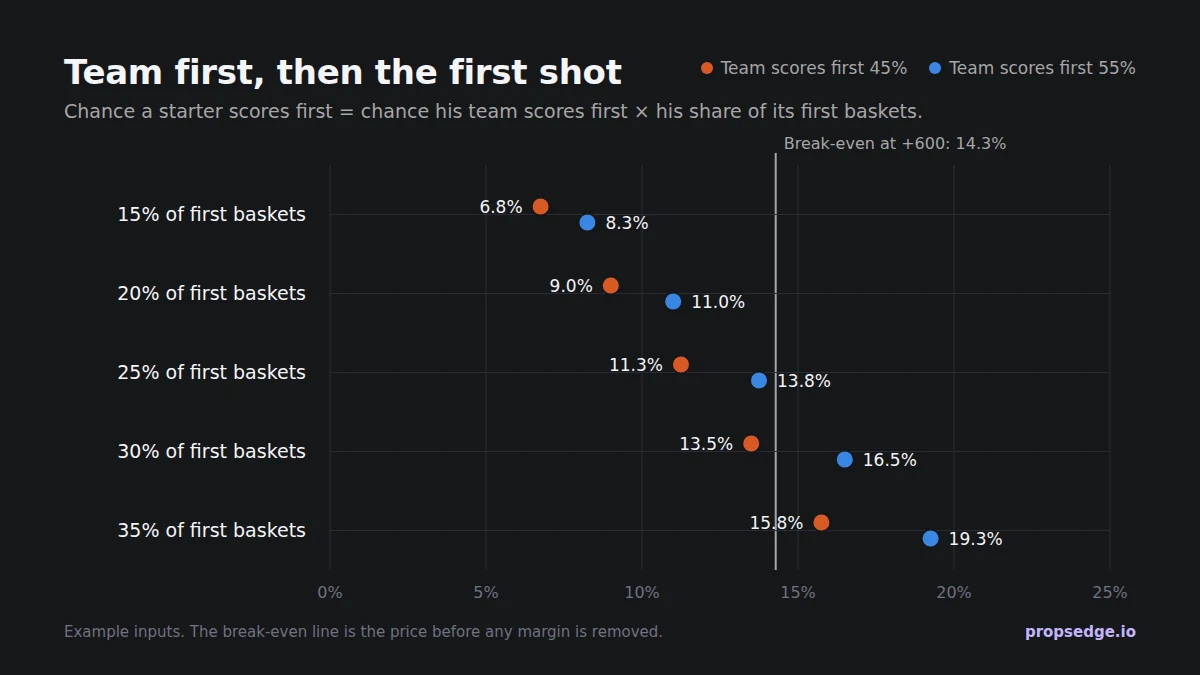
Take a starter at +600, which needs 14.3% to break even. If his team scores first 55% of the time and he takes 30% of its first baskets, his chance is 16.5%, and the bet returns about 15.5 cents per dollar. Drop his share to 25% and it is 13.8%, a small loss. If his team is more likely to lose the tip and only scores first 45% of the time, even the 30% share falls below break-even.
The team's chance of scoring first comes from the tip projection and how well each side scores on its opening possessions. The share comes from the first-shot data. Both are things you can look up, which is what makes this market beatable.
Covering two players
Betting two starters from the same team is a common way to bet on a team scoring first without needing to pick the exact player. It can make sense, but do the math: each bet carries its own margin, and you lose both stakes when the other team scores first.
Two starters at +600 and +700 cost two units. If one of them scores, you collect seven or eight units back including that stake. The combined bet pays off when the team scores first and one of your two finishes the play. Price it as the sum of the two chances, not as "the team scores first", and compare that with what two stakes cost.
Size for the losing streaks
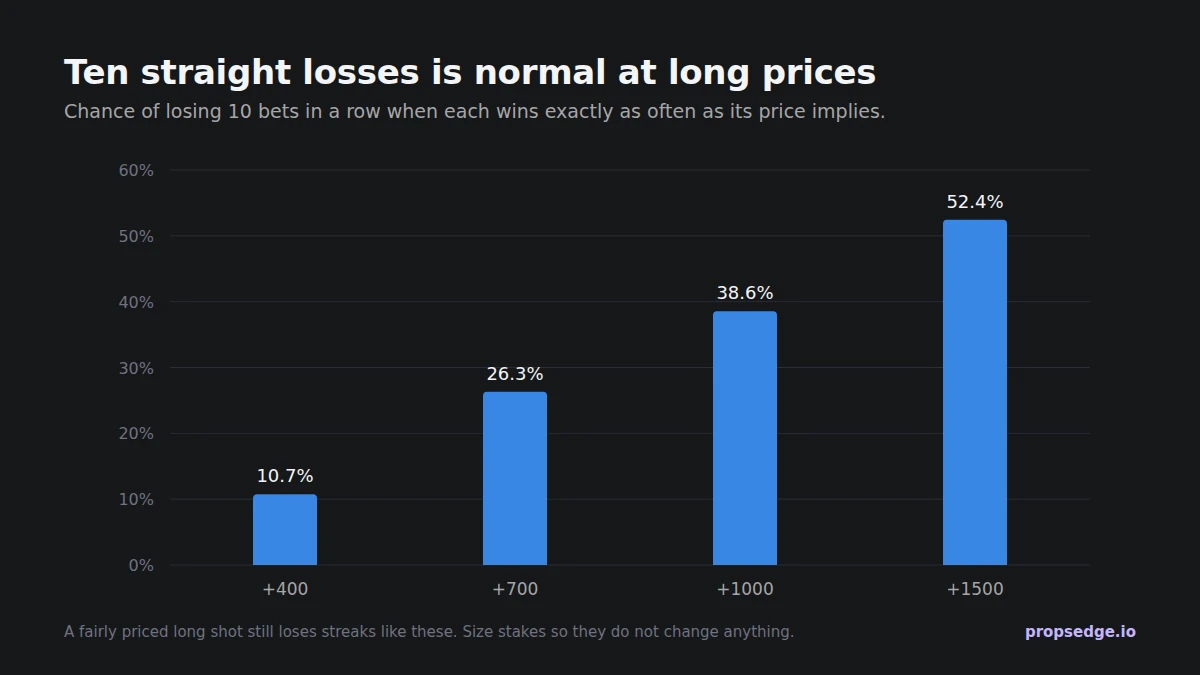
A first basket bet at +700 loses most nights even when it is fairly priced. Ten straight losses at +700 happen 26.3% of the time with no edge at all. That is the market working normally. Stake small and flat, a fraction of a normal unit, and judge the method over hundreds of bets, not one bad week. The variance guide and bankroll guide explain the sizing.
The routine
- Tip: compare the two jumpers' tip win rates and check who is actually jumping tonight.
- First shots: look at each starter's share of his team's first shots and first baskets, split by whether the team won or lost the tip.
- Price it: team-scores-first chance times the player's share gives your number.
- Shop: find the best price for that player across books, then compare it with your number. The EV calculator shows what the edge is worth.
- Stake small and flat, and log every bet with your number at the time.
Doing it in PropsEdge
The free NBA First Basket cheat sheet shows the day's top first basket picks with the model's probability next to the market's price. A PropsEdge membership opens the full sheet for every game:
- every starter's first basket rate and first shot rate, with the first basket rate split by tip won and tip lost
- each team's tip-off record and projected tip win
- how often each team scores first
- play-type profiles
- correlation strategies for pairing a team's top two first scorers, depending on the tip
- the edge against the best odds across sportsbooks
The WNBA First Basket sheet does the same for the WNBA season.
A first basket bet is a bet on the tip, the first play and the price, in that order. Bet what you can afford to lose. If it stops being fun, stop. Help is free and confidential at 1-800-GAMBLER.
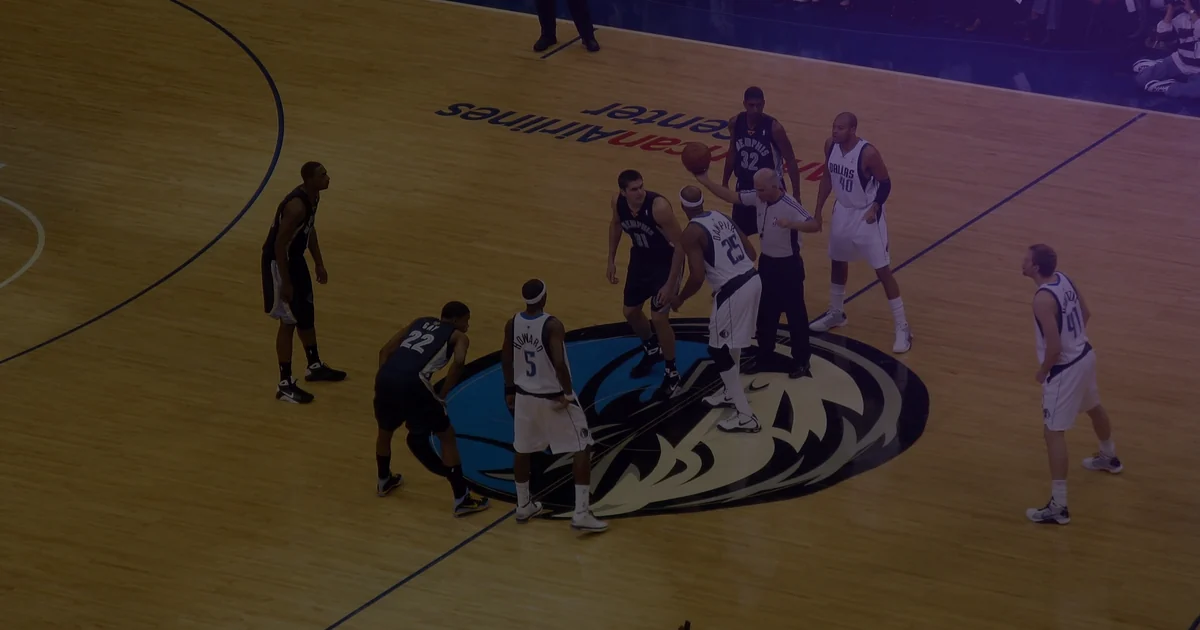
Cover photo: Michael Barera, CC BY-SA 4.0, via Wikimedia Commons, color graded.
.jpg)