
Combo props add two or three of a player's stats into one line: points + rebounds + assists (often written PRA), points + rebounds, points + assists, and rebounds + assists. They look like a way to spread the risk, since a quiet scoring night can be saved by rebounds and assists. Sometimes they are. But a combo has its own math: the line is bigger, the swings are bigger, and the three stats are tied together by the one thing they all need, his minutes. This guide is part of our Sport Guides series, alongside the guides to points, rebounds, assists and threes. The NBA player props guide covers minutes, usage and pace for every stat.
Build the combo from its parts
A combo line is only as good as the projections under it. Project each stat on its own, the way the single-stat guides describe, then add them up: points from his shots and free throws, rebounds from his chances, assists from his potential assists. Don't project the combo from his combo average. If a teammate is out and his assists will rise while his points stay flat, his combo average won't show it, but adding up the parts will.
The PropsEdge player page has a chip for every combo (PRA, PR, PA and RA). On a combo chart each bar is split into its parts, so you can see whether a run of overs came from one stat or all of them. The injuries card next to the chart has With and Without buttons for each injured teammate, which filter the game log to the games that teammate missed.
The same edge is worth less on a bigger number
Take one player in the model behind these charts: 34 minutes a night, give or take 4, averaging 25 points, 7 rebounds and 6 assists, so 38 points + rebounds + assists. Now suppose every line sits 1.5 below his projection.
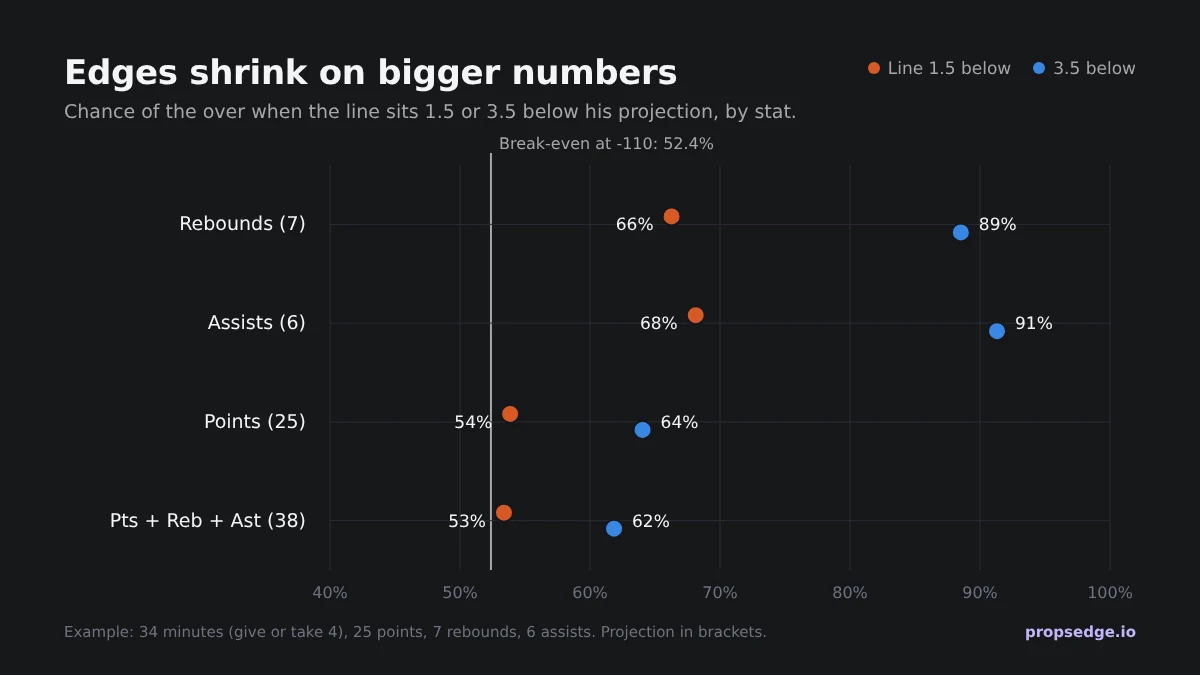
A line 1.5 below his projection is a big edge on rebounds, a 66% over, and barely anything on the combo, a 53% over. The reason is how much each stat swings. In the example, his rebounds move about 3 from game to game, his points about 8, and his combo about 9.6. A point and a half is half a normal swing for rebounds and a sixth of one for the combo. Points also have a small trap of their own: the occasional big night pulls his average above his typical game, so even a line 1.5 under his average is only a 54% over.
So when your projection and a combo line disagree by a point or two, that is usually not enough. A combo line needs a bigger gap before it is a bet, and the same gap on a single stat with a small number is worth much more.
Minutes tie the three together
Points, rebounds and assists all need time on the floor. When he plays 40 minutes, all three tend to go up; when a blowout sits him for the fourth quarter, all three go down together. That makes the combo swing more than you would get by adding up three separate stats.
In the example, if the three stats moved independently, his combo would swing by about 9.1 from game to game. Because they share his minutes, it swings by about 9.6. And if his minutes were locked at exactly 34, the swing would drop to about 8.5. Uncertain minutes are the single biggest thing that makes a combo harder to call, so check the rotation, the spread and rest first. A big spread is a reason to shade a starter's whole combo down, not just his points.
A combo is not a parlay
A combo over and three separate overs are very different bets. In the example, his over 24.5 points, over 6.5 rebounds and over 5.5 assists each hit about half the time. All three hit together only about 16% of the time; his combo over 37.5 hits about 49% of the time. The combo pays like a single bet because it only needs the total to get there: a 30-point night can carry a quiet rebounding night.
The shared minutes matter here too. If the three stats were independent, all three overs would hit together only about 14% of the time; because a big-minutes night lifts all three, it happens a bit more often. That is the same reason books price same-game parlays of one player's overs differently from a regular parlay.
Price the whole ladder
His combo lands anywhere from about 26 to 51 in eight games out of ten. He finishes at 30 or below about 22% of the time and at 46 or above about 21% of the time, and neither is a sign that anything changed.
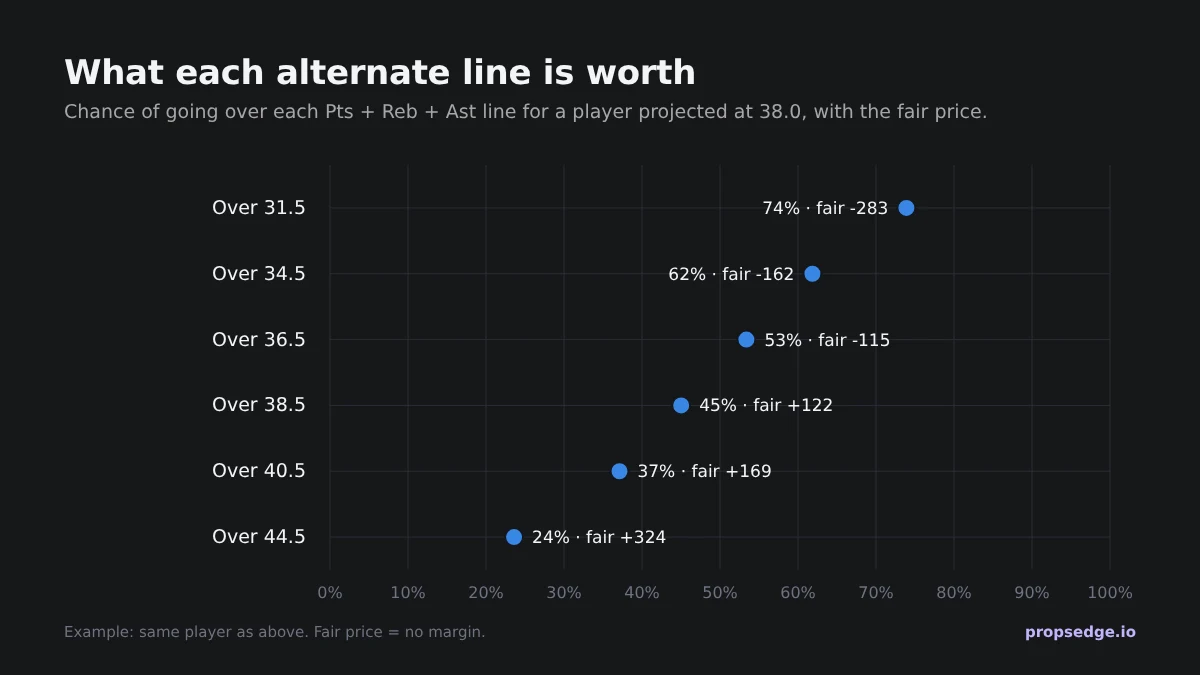
Price every rung from the same projection. For this player, over 36.5 is fair at -115 and over 38.5 at +122, so a book at -110 on 36.5 is barely an edge, while over 34.5 is fair at -162: at -130 it is a much better bet on this projection, even though it pays less. Alternate lines carry their own margins, so compare each one with the fair price. The odds converter turns any price into its implied chance, and the EV calculator shows what the gap is worth.
On pick'em apps, combo picks are popular. A pick on a two-pick PrizePicks Power play needs to hit about 57.7% of the time to break even, more than a -110 bet's 52.4%. For this player, a combo line of 36.5 is a 53% pick, a loser at that payout; at 34.5 he is a 62% pick, which clears it.
Which combo to bet
- Leave out the part you can't call. Points are usually the stat that swings the most: in the example, 8 from game to game against about 3 for rebounds and assists. If you like a big man's rebounds and assists but not his scoring, rebounds + assists keeps the noisy part out of the bet.
- Use the combo that matches his role. Points + rebounds for a big who scores inside, points + assists for a guard who runs the offense. A combo that includes a stat he barely produces just adds noise for little gain.
- Watch the overlap with injuries. When a teammate who passes a lot is out, assists may go up while points go down. The combo can stay flat even when the parts move a lot, which is a reason to bet the parts, not the combo.
How a combo is counted
- Every part counts the same way it does alone. Points include free throws, a rebound goes to the player who gains control, and an assist needs the pass to lead directly to a made basket.
- Overtime usually counts, and if he is ruled out before the game the bet is usually void; if he starts and leaves hurt, rules differ by book, so check yours.
The matchup, on the sheet
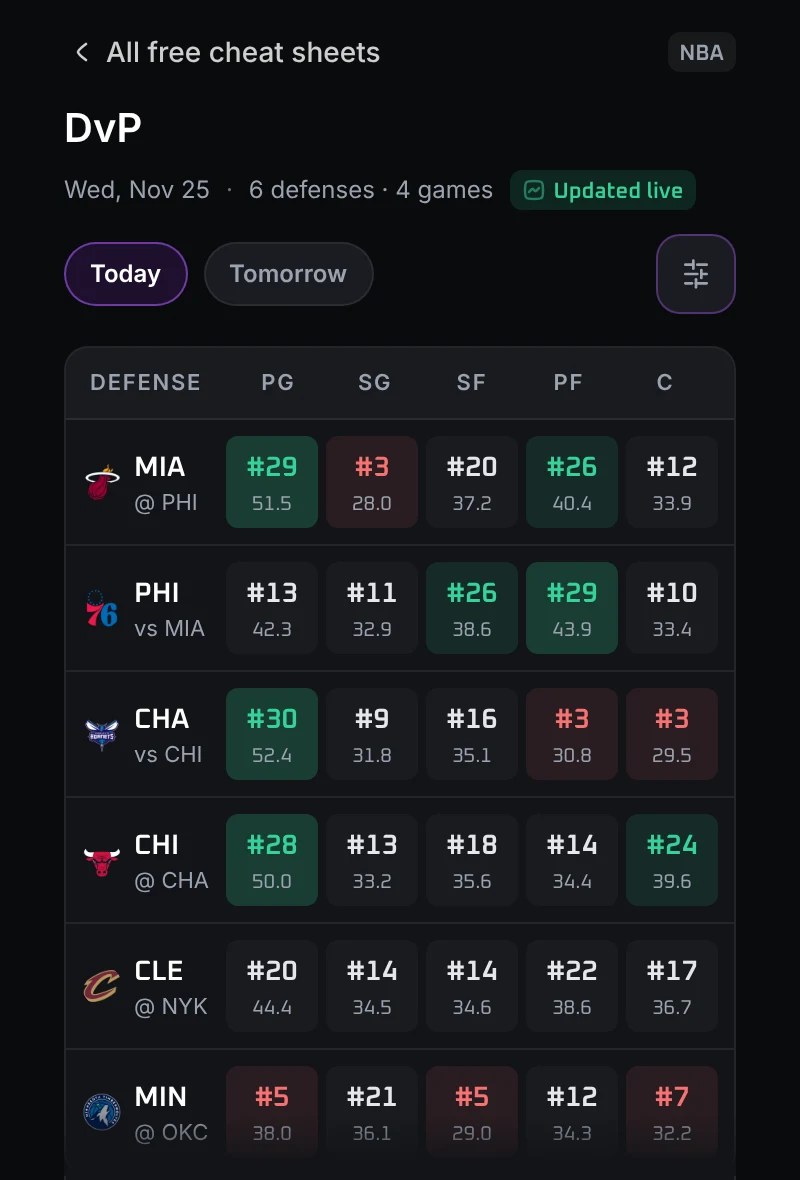
The free NBA Defense vs Position sheet shows what each defense allows to each position, by stat and window, including every combo. With points + rebounds + assists selected for today's games, Charlotte has allowed 52.4 a game to point guards, the most in the league, and Chicago 50.0. Use a number like that to nudge each part of your projection, not as a bet on its own. The defense vs position guide explains how far to trust it.
- Shop the line. Books often post different combo lines for the same player. The free NBA Line Shopping sheet flags props where one book is paying meaningfully more than the rest, and the devig calculator strips the margin from a two-sided price.
- Shortlists. The free NBA Soft Spots sheet lines posted props up against the softest defenses for that position and stat, and NBA Prop Streaks shows who has cleared his current line most often lately. Both are places to start, not bets.
The routine
- Minutes first, from the rotation, the spread and rest, since all three parts depend on them.
- Project each part on its own, then add them up.
- Ask for a bigger gap on a combo than on a single stat before you bet it.
- Projection to probability at every line, then price, shopped across books.
- Stake flat. In the example, a normal game lands anywhere from 26 to 51. The bankroll guide covers sizing, and the variance guide explains why good bets still lose often.
Doing it in PropsEdge
The projections board shows every player's combo lines with our projection, the line movement and the best price across sportsbooks. The player page has a chip for each combo, with each bar split into its parts, his projected minutes and the With and Without filters for injured teammates. The free NBA cheat sheets above cover the matchup, the streaks and the price. A PropsEdge membership unlocks every row of every sheet.
A combo line is three forecasts and one set of minutes. Bet what you can afford to lose. If it stops being fun, stop. Help is free and confidential at 1-800-GAMBLER.
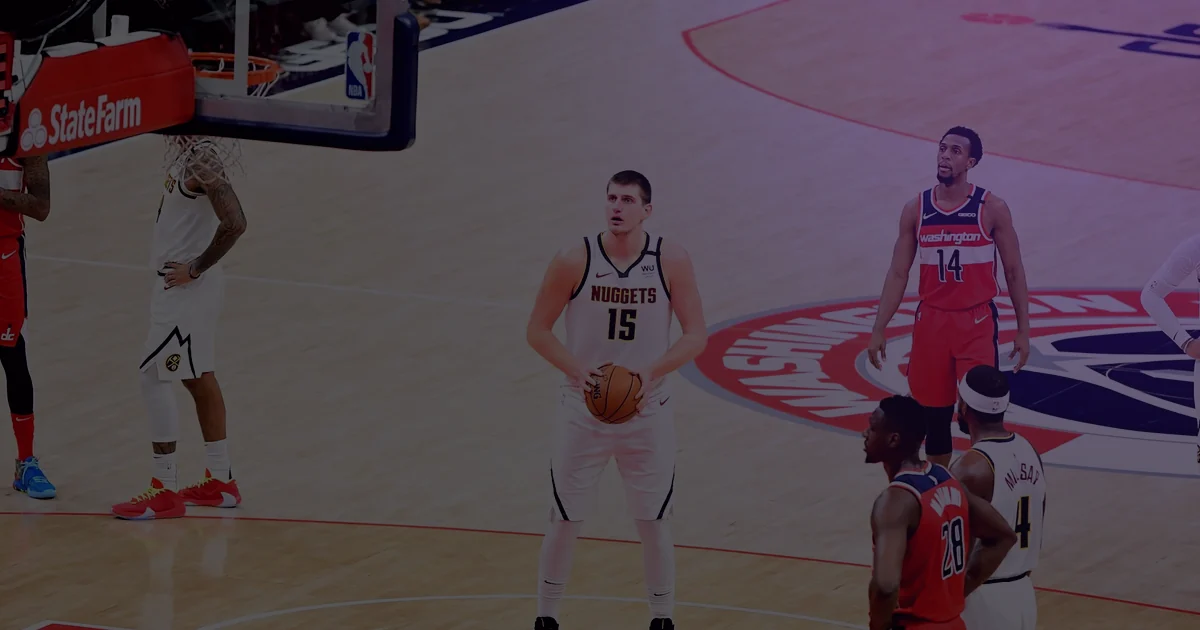
Cover photo: Nikola Jokić at the free-throw line, Denver Nuggets at Washington Wizards. All-Pro Reels, CC BY-SA 2.0, via Wikimedia Commons, cropped and color graded.